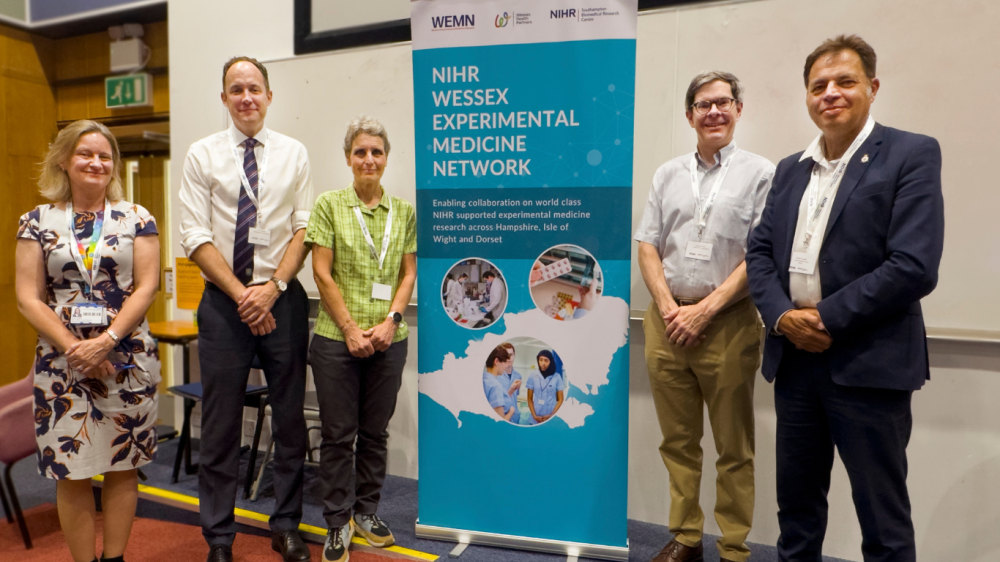
A unique regional networking event in Southampton convened clinicians, researchers, innovation leads and military representatives to explore new ways to directly improve the health and wellbeing of those who serve, their families and veterans
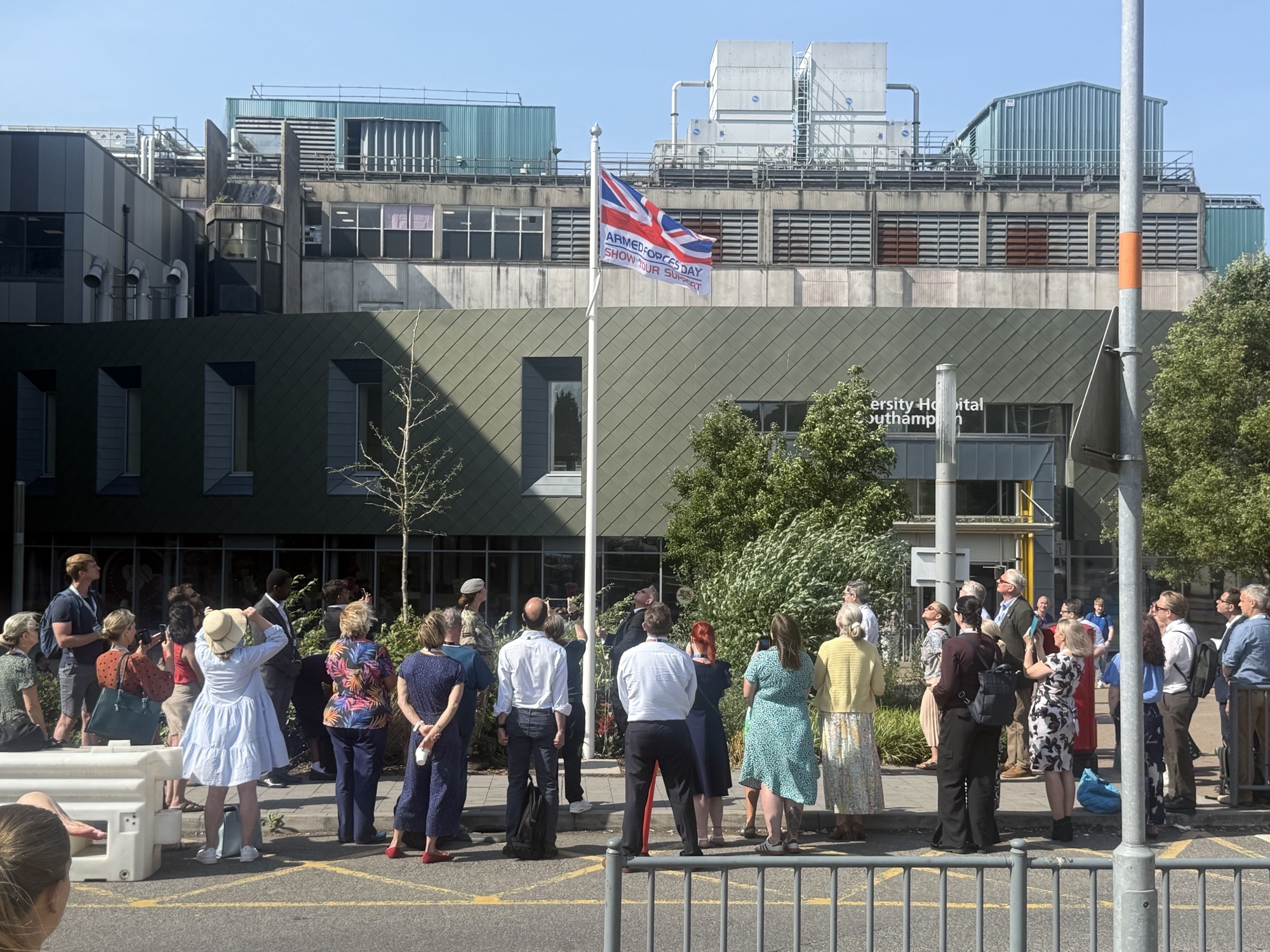
To mark Armed Forces Week, attendees joined the armed forces community represented within University Hospital Southampton at their annual flag raising. Delegates then shared and discussed key health challenges affecting Armed Forces populations, including physical injury, rehabilitation, mental health, infection and emerging threats. Workshops focused on new collaborative research and innovation approaches to meet these health needs. The event was hosted by the NIHR Wessex Experimental Medicine Network.
 Wessex is home to one of the largest and most concentrated Armed Forces communities in the UK. Census and local authority data show veteran populations of around 7–8% of adults in Dorset and Wiltshire, roughly double the national average. In Hampshire, the wider Armed Forces community accounts for around 10% of the population. These areas include a significant serving population alongside veterans and families, making our region of strategic importance for Armed Forces health and research.
Building stronger partnerships
The event highlights the importance of collaboration between defence, health professionals, academia and industry in improving health outcomes for Armed Forces personnel, veterans, and their families. This approach reflects the national direction set out in the Defence Medical Research Strategy 2026–31, which calls for closer collaboration across defence, academia and the wider health research system.
Professor Nicholas Harvey, Director Designate of the NIHR Biomedical Research Centre: Southampton, said: “The challenges facing our armed forces communities are complex and evolving, and cannot be addressed by any single organisation working alone. Events like this are vital in bringing together the breadth of expertise we have across Wessex to build the partnerships needed to translate research into real-world impact.”
Shared research priorities
The day showcased key health priorities for the Defence Medical Research and fostered greater connection between the Defence Medical Services and Wessex-based universities and NHS structures. The event supported the key recommendations for closer working between the Ministry of Defence and the NHS and NIHR research infrastructures.
Dr Philip Woodgate, Director of Research for Defence Medical Command, delivered one of the keynotes. “The Strategic Defence Review highlighted the need for closer collaboration between defence, the NHS, academia, and industry,” he commented. “Defence Medical is grateful for the opportunity to engage at events like this in order to share its priorities. These span significant breadth, from mental health to blast injury, and tackling them will require cross-organisation and interdisciplinary working.”
Another speaker, Dr Jo Fallowfield, Head of Musculoskeletal Injury Mitigation and Nutrition, Royal Navy, added: “Through our multidisciplinary work specifically addressing musculoskeletal injury mitigation in the Royal Navy, we have demonstrated how partners from academia and industry can effectively work together with defence to address complex, interconnected health challenges. The outputs from our work will benefit our Service men and women, but are also relevant to the wider Wessex community – and beyond.”
Ash Boreham, Deputy Director of Partnerships for Research and Innovation, NHS Dorset, reflected after the event: “Wessex has a unique opportunity to connect local expertise with national defence priorities. By working together across organisations, we can ensure research is both high quality and directly relevant to the needs of the Armed Forces community and their families.”
Supporting collaboration
The event featured a series of speed pitches and seed-funding opportunities, enabling attendees to share early-stage ideas and identify collaborators. Afternoon workshops supported teams to develop project proposals, helping to strengthen the pipeline from research concept through to funded delivery.
By connecting regional expertise with national priorities, the aim was to strengthen partnerships, identify shared research priorities, support collaborative funding applications and raise the profile of Armed Forces health research.
Looking ahead
The event marked an important step in building a more connected and coordinated research community across Wessex.
Conversations during the session indicated an appetite for connections to develop into a more formalised network.
If this is something you would be interested in being involved in, please do get in touch - enquiries@wessexhp.org.uk